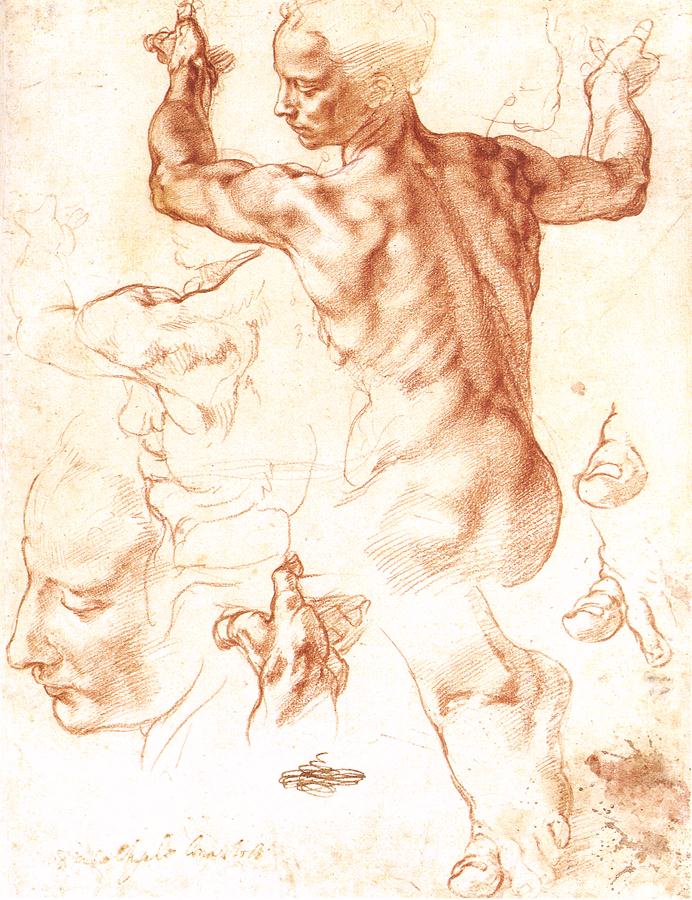
So, I got our handout of assignments a bit late and didn't know about some of the assignments, and am trying to get caught up!
Proportions are relationships of size; how parts measure to each other as well as a whole.
Body measurements- usually reference to "heads" for units of measure.
Average- usually about 7 heads tall is an average male heigth. However, most people prefer an 8 head tall figure, like the Greeks and Romans did. They have a more elegant feel and most people like this ideal figure better than reality.
Proportions of masses- using the head as the unit of measure, on average the torso, or ribcage is about 1& 1/2 to 1& 3/4 heads tall, and the pelvis is about the same in heigth as the head. In width, shoulders are about 2 heads wide and hips average 1& 1/2 heads. The head is usually about 2/3's wide as tall. These are good basic averages.
Key points- shoulders, elbows, knees, ankles and wrists; also nipples, navel, and skeletal points are good landmarks and are all points to use sighting and measuring devices to get more accurate proportions.
Sighting devices- visual tools used to take measurements; comparative measuring, angle dropping, plumb line, level line.
Comparative measure- using a straight tool (pencil or rod) to measure length of head to compare body parts, heigth, and width. Must hold arm straight out to get accurate measurements each time to be accurate, cannot bend arm or will get different measurements and proportions will be off.
Plumb line- hold straight edge out vertically to see alignment parts or areas, locate intersections of key points or parts for accurate positioning.
Level line- hold straight edge horizontal to locate intersections and see alignments for accurate positioning.
Angle dropping- holding straight edge against angle of key parts of figure to determine relationship of intersections and get more accurate positioning, hold angle and lay against drawing to transfer same angle and align parts within drawing.
Midpoint- the vertical center of the subject